


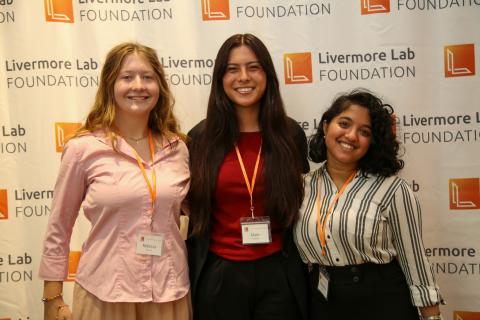
Even before Maili Malabey began studying computer science at San Jose State University, she was gaining hands-on experience at Lawrence Livermore National Laboratory (LLNL) through the Early Internship Program.
Established in 2023, the Early Internship Program builds on relationships formed through LLNL outreach and after-school clubs in Livermore and Tracy. As one of the program’s first interns, Malabey got a firsthand look at the Lab’s unique research environment as well as the opportunity to explore how computing can support scientific discovery and national security. What started as a one-summer internship became a multiyear journey of increasingly sophisticated work and impact.
During her first summer, Malabey contributed to the LLNL Independent Diagnostic Scoring System (LIDSS) flight testing project. LIDSS is a deployable suite of rafts, unmanned aerial vehicles, cameras, hydrophones, and radar used to collect remote sensed data for flight tests in the deep ocean. Malabey developed image processing techniques and a graphical user interface to help analysts identify elements of interest among vast optical data collected during a mission.
In subsequent summers, she joined the GUIDE Program ( Generative Unconstrained Intelligent Drug Engineering), which develops predictive tools and experimental capabilities to quickly respond to new pathogens and accelerate countermeasures to biological and medical emergencies. Working with mentor Becky Haluska, Malabey developed scripts to clean assay files, convert XML data into Excel worksheets, and automate visualizations using Seaborn, a Python data visualization ;library that uses Matplotlib underneath to plot graphs.
“Maili has left a real, tangible mark on the project,” says Haluska. “There are scripts she wrote in her first year that are still in use, and the work she’s doing now contributes to cutting-edge capabilities."
Malabey also built interactive tools for analyzing high-throughput data from WetLab and LabChip platforms, introducing AUC-based visualizations and automating CSV-to-graph conversions. These innovations help LLNL analysts interpret results more efficiently.
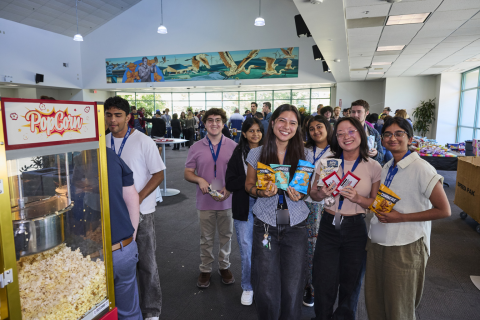
The lasting value of her work became clear when Malabey returned to LLNL this summer for her fourth internship and saw that tools she developed the previous summer remained in use.
“It was rewarding to see that my work had impact and was helping people beyond the time I spent developing it,” she says.
Throughout her internships, Malabey has gained experience in Java, Python, SQL, regular expressions, data visualization, and image processing while learning to manage multiple projects and communicate with experts from different disciplines.
Malabey's experience shows how Coding with LLNL and other STEM clubs and the Early Internship Program can provide more than a casual foray into skill building. For Malabey, it was the beginning of a sustained connection to scientific research, technical growth, and a meaningful career path. Her internships at LLNL have shaped her interest in data and visualization, while also revectoring her educational and career pursuits away from traditional big tech. LLNL’s national security mission and its emphasis on research, discovery, and growth resonate with her interests.
Malabey's advice to interns: ask questions, accept mistakes as part of learning, attend events, and connect with people throughout the organization. “Those conversations can lead to valuable advice and new opportunities,” she says.
LLNL’s Early Internship Program offers entry-level summer internships to students interested in gaining foundational work experience in computer science and STEM fields. Active participation in STEM clubs, organizations, or projects is highly valued. As with all LLNL internships, students are matched with LLNL mentors who provide relevant project work, hands-on experience, and encouragement.
—Deanna Willis