HPC Cluster Engineer Academy
Learn the basics of cluster engineering and system installation
Apply Now Sep 1, 2026 - Jan 15, 2027What Is the HPC Academy?

This 9-week paid internship with Livermore Computing (LC) gives you direct experience with running and maintaining high performance computing (HPC) systems.
Although it doesn't get much attention in traditional academic coursework, cluster engineering is a critical role in HPC centers around the world. For every software developer or computational scientist who enjoys a fast, reliable, and up-to-date computer system, there's a cluster engineer who maintains it.
As an HPC Academy intern, you'll learn the basics of cluster engineering and system installation under the guidance of our experts. This internship provides practical, real-world application of knowledge no HPC center — like LLNL — can live without.
What Is an HPC Cluster?

A cluster is a system of interconnected computers called nodes. They are connected through a high speed network and generally use the same hardware and operating system. Clusters enable computer scientists to run their code more quickly than on a single computer — the more nodes in the cluster, the higher the computing capacity.
A cluster with thousands of processing nodes is a supercomputer, like the systems we operate at LLNL. We are home to some of the world's fastest supercomputers, including El Capitan.
What Will I Learn?
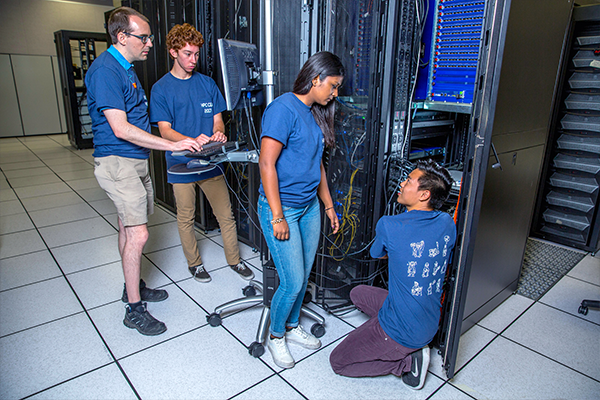
HPC Cluster Engineer Academy interns have access to LLNL's top scientists and facilities. The curriculum begins with the basics of shell scripting, distributed version control software, and compiling/porting software before moving on to system installation, networking, security, file systems, and other topics of paramount importance to HPC centers.
Every day of the internship brings something new. Lectures led by HPC experts will give you the confidence to apply cluster engineering principles and ideas to real hardware and software. You'll join forces with teammates to build up a cluster and tackle a distributed software project on that cluster. At the end of the summer, you and your HPC Academy peers will present what you've learned and receive valuable feedback.
At the HPC Academy you'll learn from the best engineers in the field and work at a state-of-the-art computational facility. Mentors are on hand to guide each team through project work and other activities. You'll come away from the summer with lasting professional connections with mentors and other LLNL staff.
Grow Your Skills
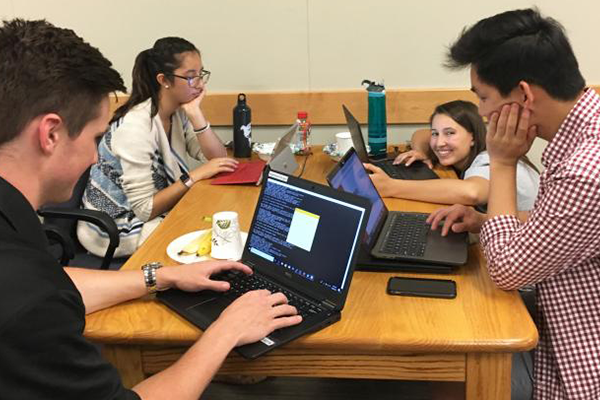
- Teamwork: Collaborate with peers and staff on hands-on projects.
- Responsibility: Discover what it takes to set up and manage computer systems.
- Experience: Gain marketable engineering skills for your resume.
- Opportunity: Grow your academic network and learn about future career paths.
- Fun: Meet people with similar interests and new ideas.
While installing a computer cluster requires some foundational skills and experience, getting it up and running is only part of the job! Understanding how your system works, how to protect it from threats like malware and viruses, and how to maintain it for optimal performance requires next-level skills. You'll explore all of this through team-based projects. Teams investigate problems and possible solutions and present their findings at a special symposium for summer scholars.
What Interns Are Saying
"The program has made learning computer science much more exciting because of the real-world experience."
"This was just the beginning of our Linux journey, and our mentor did a great job in introducing us to the subject."
"It was very interesting to see how to configure a cluster and how complex the process was."