


Distinguished Member of Technical Staff (DMTS) is the highest technical staff level achievable by a scientist or engineer at LLNL. Appointment is reserved for Laboratory scientists and engineers who have demonstrated at least one of the following:
- A sustained history of high-level achievements in programs of importance to the Laboratory.
- A sustained history of distinguished scientific and technical achievements, having become a recognized authority in the field.
- A fundamental and important discovery that has had sustained, widespread impact.
Jonathan Allen
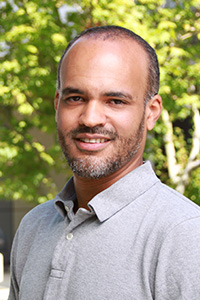
Jonathan Allen earned his PhD in computer science from Johns Hopkins University and serves as a senior informatics scientist in LLNL’s Computing directorate. He leads informatics efforts supporting biopreparedness through computational drug discovery, pathogen characterization and response to emerging infectious diseases. Allen has led sustained research programs advancing scalable methods for metagenomics, viral population analysis and data-driven molecular modeling. He has contributed foundational computational tools for pathogen detection and microbial forensics, including widely adopted open-source software for agnostic biodetection and metagenomic analysis. His work has enabled improved pathogen identification, molecular surveillance and countermeasure development across national security and public health missions. Allen’s contributions have been recognized through multiple Laboratory awards for scientific and institutional impact. He actively develops and maintains open-source software (such as LMAT) and provides technical mentorship across research teams, helping to translate advanced computational methods into operational capabilities and supporting the Laboratory’s continued leadership in computational science for biosecurity.
“Being named a DMTS is a tremendous honor,” said Allen. “This designation reflects the incredible collaborative opportunities the Laboratory has afforded me to apply cutting-edge computing to pressing health and security challenges.”
Peer-Timo Bremer
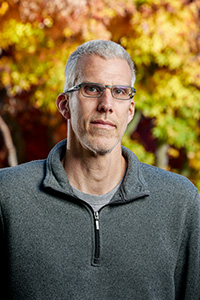
Peer-Timo Bremer is an internationally recognized expert in topological data analysis, visualization, scientific machine learning (ML), and ML interpretability. With a PhD in computer science from the University of California, Davis, he serves as a visionary leader for Livermore’s artificial intelligence and ML research strategy. Bremer is a key member and leader of several flagship projects at LLNL, including research on autonomous multiscale simulations, digital twins, and cognitive simulation. His leadership in artificial intelligence (AI) is further demonstrated as the Laboratory Directed Research and Development AI Initiative lead and as the AI Innovation Incubator (AI3) director. With over 100 journal publications and 90 conference papers, Bremer has demonstrated a sustained publication record in top venues spanning applied science, major ML and AI conferences, and visualization and computer graphics. He is the recipient of multiple LLNL and external awards, including the IEEE Visualization Test-of-Time Award for topology research.
“I am honored to be considered in the same category as the existing DMTSs, many of whom I have looked up to over the years,” said Bremer. “I will do my best to live up to their example on how to best support Livermore’s mission and its people.”
Trent D’Hooge
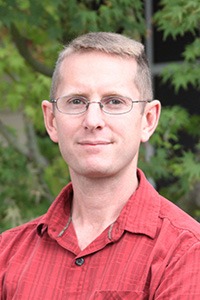
As the deputy division leader for operations at Livermore Computing (LC), Trent D’Hooge leads design and deployment of supercomputers and testbeds, ensuring LLNL remains the dominant computing center worldwide. He leads the Tri-Lab Operating System Stack (TOSS), focusing on providing a common, stable HPC operating system. In this role, he mitigated critical LC shortcomings and pushed for adoption of open-source practices that have been critical for El Capitan’s success. D’Hooge also directs collaborations with industry leaders to deploy innovative technologies and improve speed of LC cloud-like, secure storage. Known as an expert in operating systems and systems level software, he serves as Livermore’s System Software Working Group lead for Collaboration of Oak Ridge, Argonne, and Livermore (CORAL) for the first NNSA exascale computer. Beyond these impactful collaborations, D’Hooge leads all emergency response operations in LC, ensuring computing systems can continue providing safe, reliable services in support of Livermore’s mission.
“I’m grateful for the support and mentorship of many great people that made DMTS possible. I wish they were all still here to see it,” said D’Hooge.
Cyrus Harrison
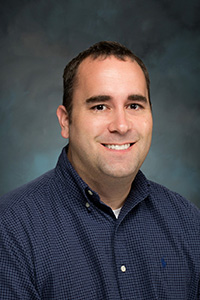
As the Weapons Simulation and Computing (WSC) Workflow project leader, Cyrus Harrison develops and leads data management, analysis, and visualization tools that support large scale multiphysics simulations in support of national security applications. He is recognized as an influential thought leader in the DOE on HPC application development, scalable visualization, and data analysis for multiphysics codes on modern computing platforms. Harrison’s sustained record of over two decades of initiating and leading software development efforts has enabled cutting-edge capabilities in WSC production applications critical to Strategic Deterrence mission spaces. He is the project leader and software architect of the VisIt open-source visualization tool, which has broad impact internationally in commercial, government, and academic organizations. Harrison is also the creator and technical leader of several other widely used simulation tools, including Conduit, Mesh Blueprint, and Ascent.
“I am grateful that SD/WSC and Computing have provided amazing challenges, opportunities, and teams that allowed me to continuously learn and contribute to LLNL and our nation,” said Harrison.
Tzanio Kolev
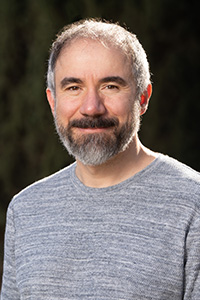
Tzanio Kolev is helping make LLNL and DOE worldwide leaders in high-order computational methods through his expertise in mathematical modeling and HPC simulations. With a PhD in applied mathematics from Texas A&M University, Kolev is the project leader of Livermore’s MFEM finite element library and was the director of the Center for Efficient Exascale Discretizations in the Exascale Computing Project. His research focuses on the development and analysis of high-order finite element algorithms, matrix-free preconditioning, massively parallel GPU simulations, and the design and implementation of large-scale scientific software for national security applications. He is a recipient of the Gordon Bell Prize, an R&D 100 Award, and LLNL’s Science and Technology and Early and Mid-Career Recognition Awards. His impact extends beyond Livermore through over 180 publications, 130 invited talks, and significant contributions to international collaborations.
“I am truly honored to receive this recognition. I have been fortunate to collaborate with many exceptional researchers and application scientists at LLNL, and I am thankful for the opportunity to contribute to the Lab’s mission together with my colleagues,” said Kolev.
Peter Lindstrom

Peter Lindstrom is an internationally recognized expert in visualization, data compression, mesh and number representations, and out-of-core and streaming methods. He holds a PhD in computer science from Georgia Institute of Technology and is a recent 2025 IEEE VIS Test-of-Time Award and 2023 R&D 100 Award recipient for inventing ZFP. ZFP is a floating-point data compression algorithm and number format that achieves orders of magnitude higher accuracy than the standard IEEE floating-point number format. This makes simulation codes more accurate, faster, and more scalable, enabling existing codes to run on much larger problems. ZFP is incorporated in more than 60 software projects, and other organizations have also released implementations of the ZFP algorithm. Lindstrom’s impact with ZFP is evident in its over 1.6 million downloads per year, placing it among the top-five most-followed LLNL open-source software projects.
“I am truly honored to have been selected as a DMTS. I feel fortunate to have been involved in so many exciting and challenging research projects over the years with tremendously talented collaborators. I am privileged to be surrounded by such amazing people and grateful for the support and opportunities LLNL has provided during my quarter-century tenure at the Lab,” said Lindstrom.