
Browse this site's news, projects, and people highlights via any of the topics in the dropdown list or below each content description.
Select a Topic:
PROJECTS
Legacy
StarSapphire
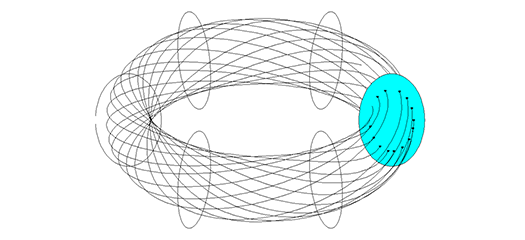
StarSapphire is a collection of scientific data mining projects focusing on the analysis of data from scientific simulations, observations, and experiments.

fpzip
fpzip is a library for lossless or lossy compression of multidimensional floating-point arrays. It was primarily designed for lossless compression.
Legacy
ADAPD
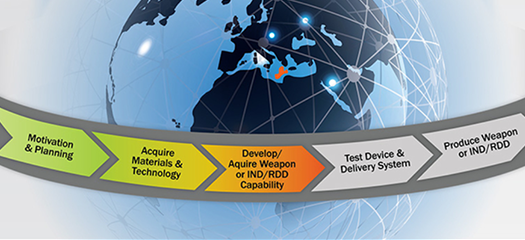
ADAPD integrates expertise from DOE national labs to analyze growing global data streams and traditional intelligence data, enabling early warning of nuclear proliferation activities.
NEWS
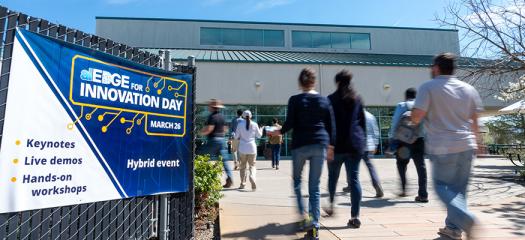
LLNL employees dive into AI’s transformative potential at aiEDGE for Innovation Day
More than 3,200 LLNL employees participated in the first-ever aiEDGE for Innovation Day on March 26—an event aimed at empowering and equipping the Lab’s workforce to integrate AI into their daily work.
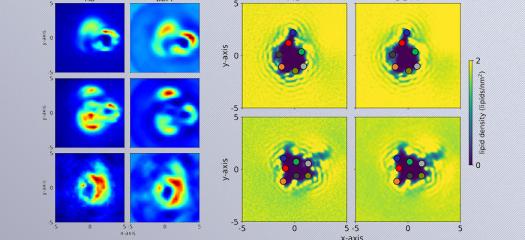
LLNL scientists take new approach to understanding protein-membrane interactions
A study led by LLNL scientists is providing new insights into the complex interactions between proteins and cell membranes, combining detailed molecular simulations and large-scale models.

Mapping cosmic shear to illuminate dark energy
In a recent study published in the Astrophysical Journal, LLNL researchers developed an innovative approach to map cosmic shear using linear algebra, statistics, and HPC.